


Issue #15
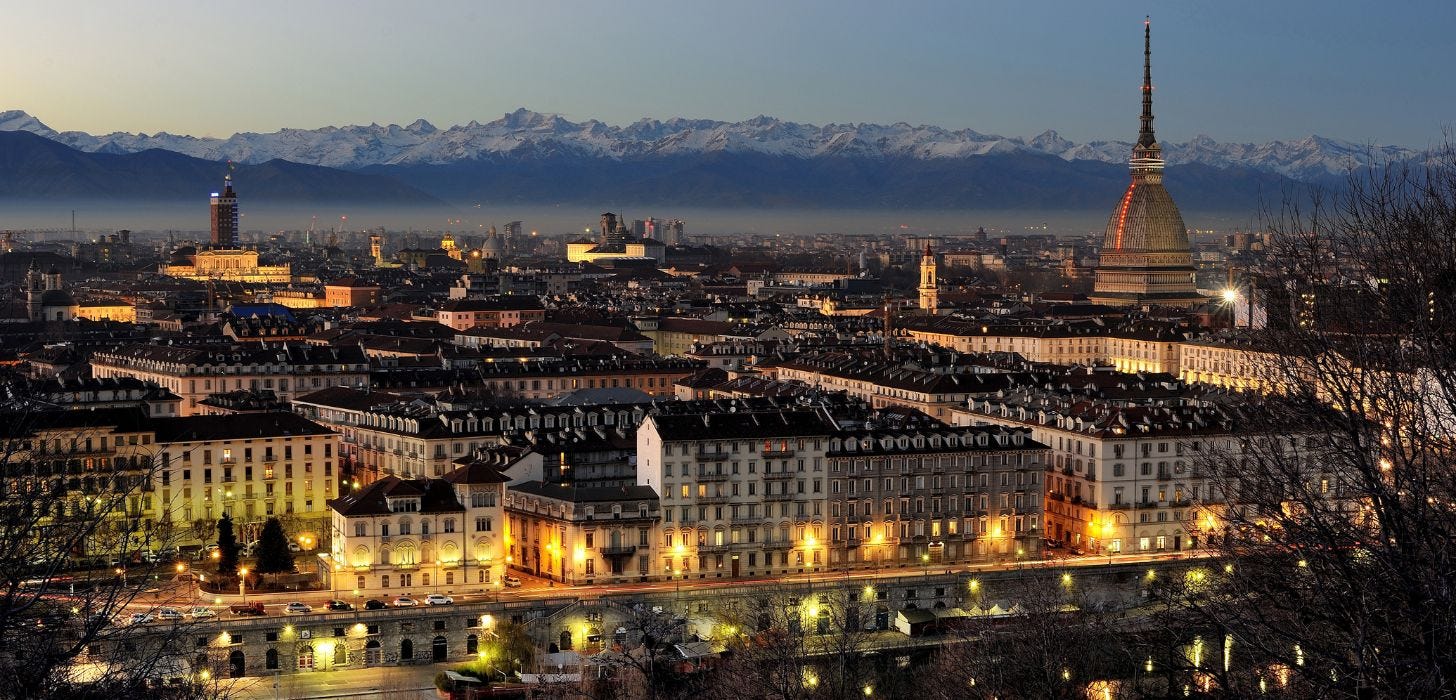
A jewel box of a city with its own brand of French-feeling flair (merci Famille Savoie), Torino is one of those places I always leave wishing I could stay a little longer.
Here are 22 reasons you should too.
1. Ooh La La: Le Langhe Wine Country
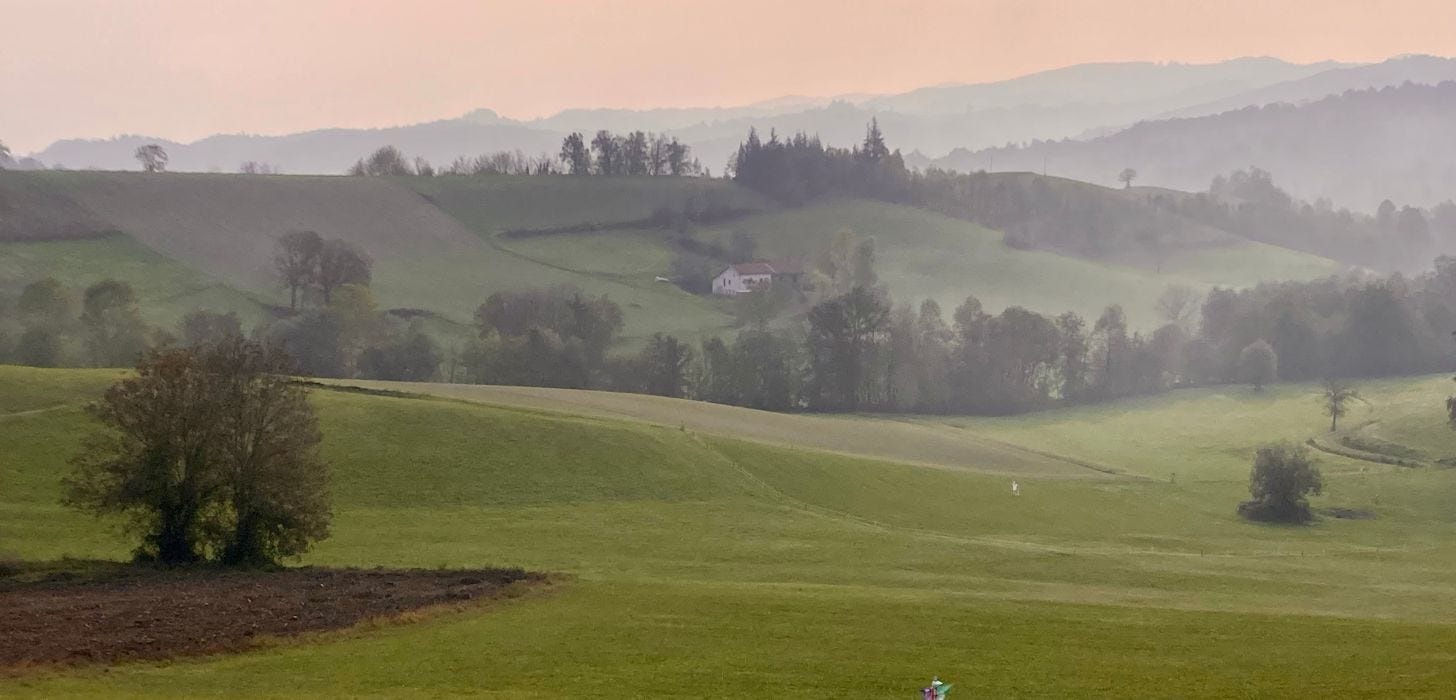
Torino is an essential stop en route to Le Langhe, Piedmont’s stunning wine country, and a UNESCO Heritage Landscape.
Langa is Piedmontese for a long ridge or hill.
An hour-to-ninety minutes south of Torino, vineyards coat the slopes surrounding the town of Alba. Before dawn, la nebbia (fog) rises from the valleys, veiling the entire region like a cloud slipped from the sky.
Sun shimmers across the horizon to reveal a fairytale scene of swooping green, dotted in tiny villages.
One of Italy’s most intriguing and sought-after wines grow here, Barolo and Barbaresco, made from the Nebbiolo grape.
Wine country warrants a visit, but don’t sleep on Torino.
Baroque and bedazzled, the one-time capital of the House of Savoy, and later one of Europe’s most modern cities, Torino is a hub of art, culture, and buzzing industry, absolutely worthy of a few days’ stay.
2. It’s so close.
An hour (or less!) from Milan, 2 hours from /bologna, and 3 hours from Florence, Torino is a simple train ride. The central station drops you in dead center of town.
3. Walkability
Torino is Italy’s fourth largest city (after Rome, Milan, Naples), but the historical center where you’ll be spending most of your time feels like Florence—minus the tourists. Human traffic makes a huge difference.
Unlike Rome and Florence’s labyrinthian Medieval and Renaissance corridors, Torino was designed around its palace courts. Wider, ordered streets imagined for processions, are easy to navigate. Pretty porticos once kept the Dukes dry, and now you…when it rains.
4. Breadsticks, Baby! (AKA Grissini)
According to local lore, during the late 1600s, a sickly Savoy prince suffered issues digesting bread with too many crumbs. A baker was brought in to find a crumb-free solution.
Ghersa is Piedmontese for a large rustic loaf. Grës and griss refer to grey or rough. Grissia therefore, referred to a long, stretched loaf, ghërsin” and Grissino, with their ‘ino’ suffix makes it diminutive, ie, a small, stretched-out, rough loaf. And there you go!
Grissini also appear on a 15th-century fresco in the Duomo of nearby town, Chieri. The jury is in.
5. Finanziera (Waste Not Want Not!)
A Torinese delicacy with humble roots. Finanziera was devoured in the royal courts, a perfect example of elevated frugality. Not for the weak at heart, the dish contains rooster combs, brain, sweetbreads, and liver. Gently sautéed with butter, shallot, and white wine, and a final spritz of lemon.
Try it at La Taverna di Frà Fiusch, located in hills just outside of town.
Keep reading here for my 22-hour itinerary!
22 Reasons to Visit Torino

Baroque and bedazzled, the one-time capital of the House of Savoy, Torino is buzzing with art, culture, industry, and incredible food and wine.
Vermouth
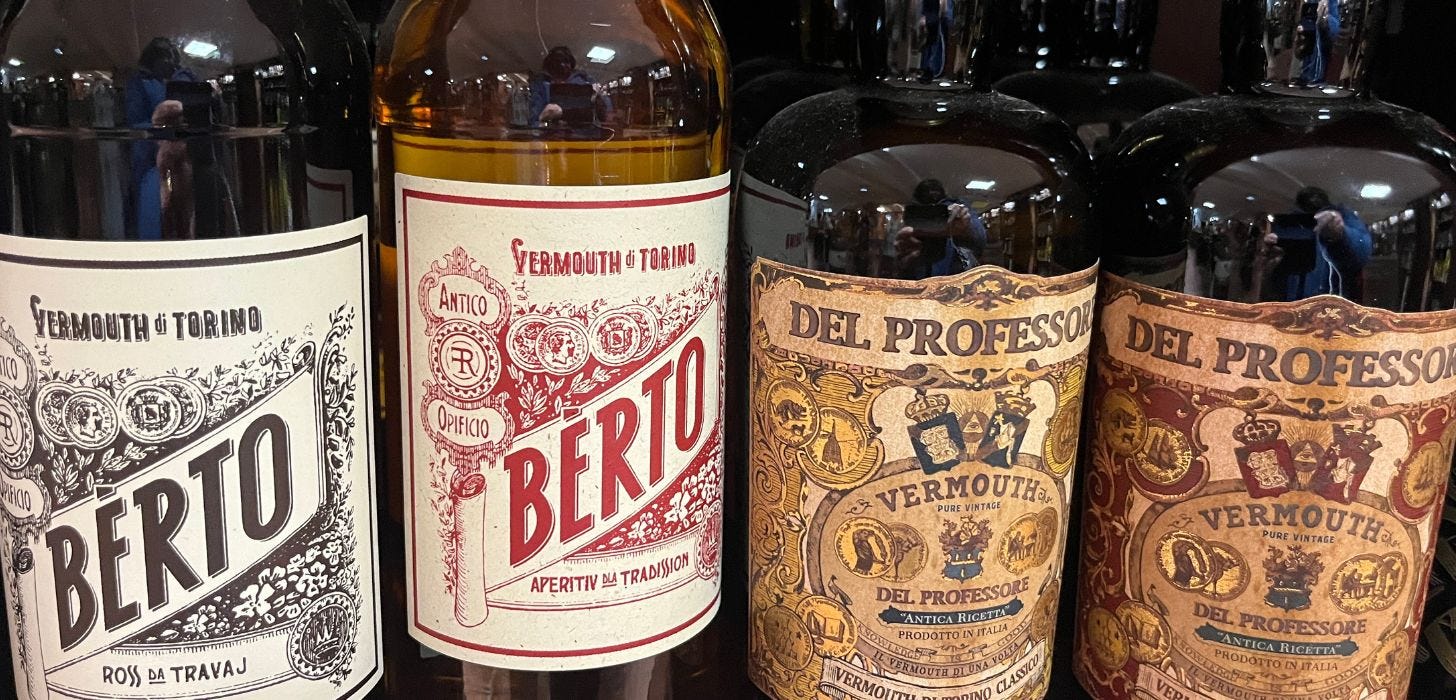
Number 13 on my list, but , it could easily be at the top.
Far more than a Martini mixer, vermouth deserves a solo in the spotlight.
The aromatized and fortified wine is a scent and flavor sensation. Born in Torino, it went on to conquer palates worldwide.
If you love to unravel the aromatic threads of wine and amaro, add vermouth to your repertoire immediately.
Keep reading here for everything you didn’t know you didn’t know about vermouth, and how to drink it.

In case you missed it, last month I wrote about two of my favorite shops in Rome—one for vintage treasures, and another for its curated contemporary collection.
I also caught up with Raffaele Stella Brienza, a darling designer in Florence whose handcrafted bowties are a loving homage to southern Italian style and artisanship.

That’s it for now dear readers!
It’s officially March, and my birthdays is around the corner.
As per tradition I’ll be running the half marathon in Athens, Greece and raising money for Achilles International.
Check out my fundraiser here, and keep your eyes open for Athens tips in the coming issues of Tastefully.
Thanks and happy….spring (?)
XO, Annie