


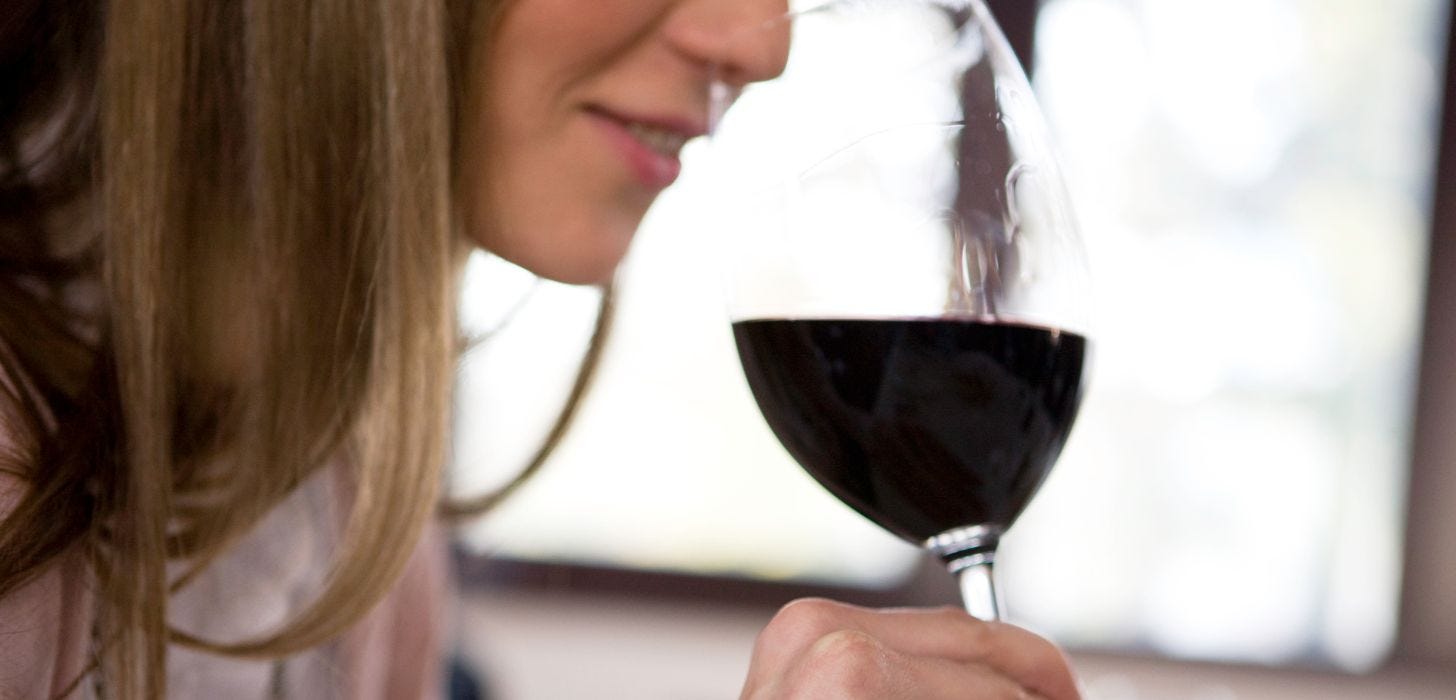
I developed this technique while studying at the Italian Sommelier Association (AIS).
Every wine lesson began with an ingredient.
Lemon slices. A bar of chocolate. A crust of toasted bread.
You can’t smell the grapefruit notes of Sauvignon Blanc if you don’t know actually now what grapefruit tastes like.
We learn smells like we learn language
Aromatic compounds are the molecules that tiny receptors in our nose and throat transmit to your brain, where the olfactory nerve interprets them. This happens instantaneously.
Our brains have a library of smells and a dictionary of words.
Most of the time we speak without thinking. We aren’t constantly translating thoughts into words in our own language. That’s because our language brain and our scent brain develop in the same way.
They build memories based on our emotional responses.
We feel something, we make an association (with a word or a smell) and it gets imprinted in our brains.
The science is far more complicated, and I will happily recommend plenty of books on the science of smell and language learning if you ask me.
So how do I get better at smelling?
What you’re trying to do is recognize and describe aromas. The first step to do this is build your scent vocabulary.
Find anything nearby. Fruit and vegetables are great, they are raw materials.
For this exercise, anything will do. A sharpened pencil. An old book. The underside of a couch cushion.
You can do this walking around.
Think of it like a meditation. What time is it? Does the ground smells different in the morning? Try to be as present as possible, especially with your nose.
Cut grass. Burning leaves.
For each thing you smell, try to remember where you’ve smelled it before, or make an new memory or association.
If there are other smells that join the chorus, take note. Do you also remember sounds, sensations, or flavors?
Cut grass takes me straight back to summer school PE during high school.
I was too busy taking musical theatre classes to get that physical education in. So come June, I joined the other theatre nerds bright and early for outdoor sports. The earth was still condensing in the morning sunshine. Cut grass was also fresh mud, Secret deodorant, and sweat.
Dead leaves is Halloween for me.
I remember them crunching under my feet walking up the sidewalks to trick-or-treat.
I remember the smell of softened milk chocolate, a crinkly metallic scent, medicinal and powdery tartness that dissolves on contact, and waxy, honey-like sheen.
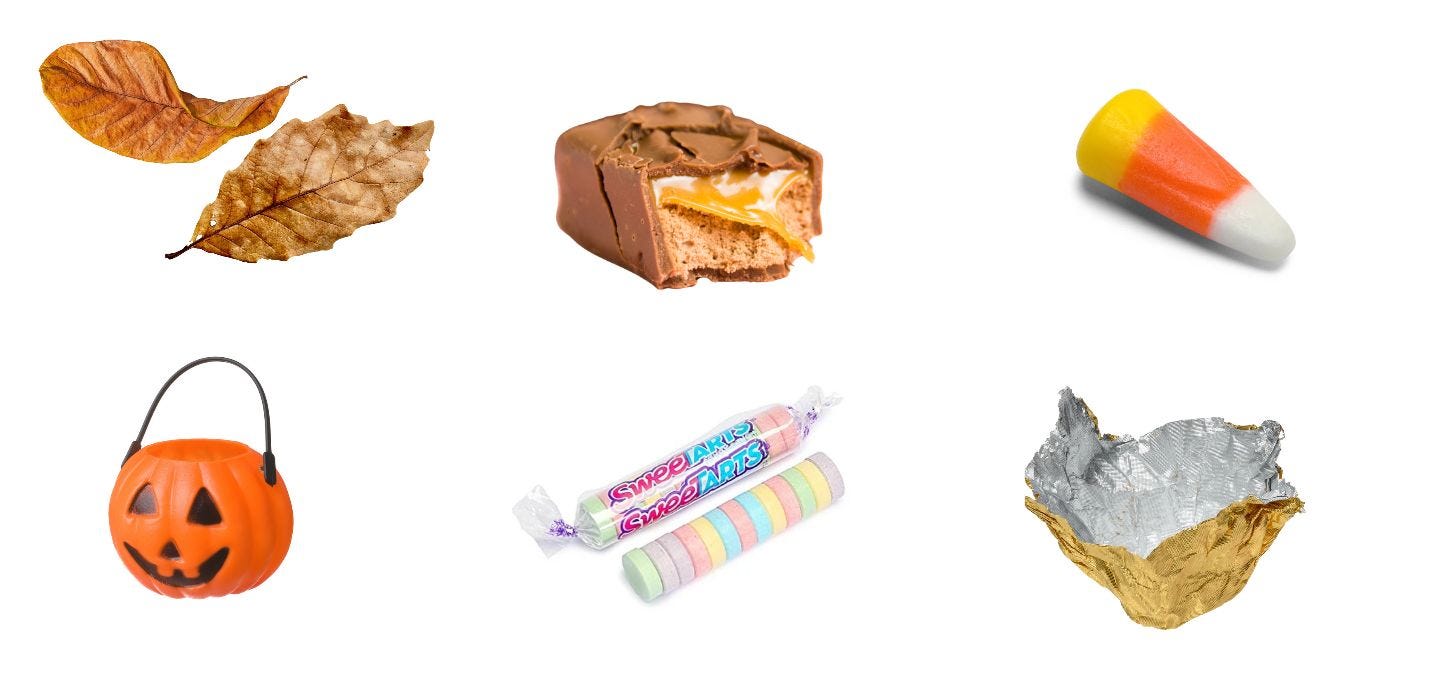
I remember the rigid plastic handle of a plastic-pumpkin-shaped bucket. It left a groove in the palm of the my hand and the edges around the opening were rough enough to scratch our fingers.
I remember feeling frustrated that I had to wear a coat over my costume, and I miss the days when I didn’t feel cold on a rainy late-October night because fun mattered more.
Write it all down. Preferably by hand. Textures, colors, sounds, flavors, and memories.
Studies using EEG and fMRI scans show that writing by hand lights up extensive connections across the visual cortex, sensory processing areas, and throughout the brain. The physical act of forming letters forces your brain to slow down and process the information.
Studies suggest that writing on paper creates a physical and spatial layout (an idea on a page, the feel of the pen or pencil, and the pressure of your hand). The motor- sensory feedback anchors the memory more firmly.
How to Smell. Literally.
Close your eyes and inhale. Short deep sniffs work best. Think about where you are now. Does this smell remind you of anything? Where were you? How did you feel?
Maybe this is the first time you are paying attention.
Keep a journal.
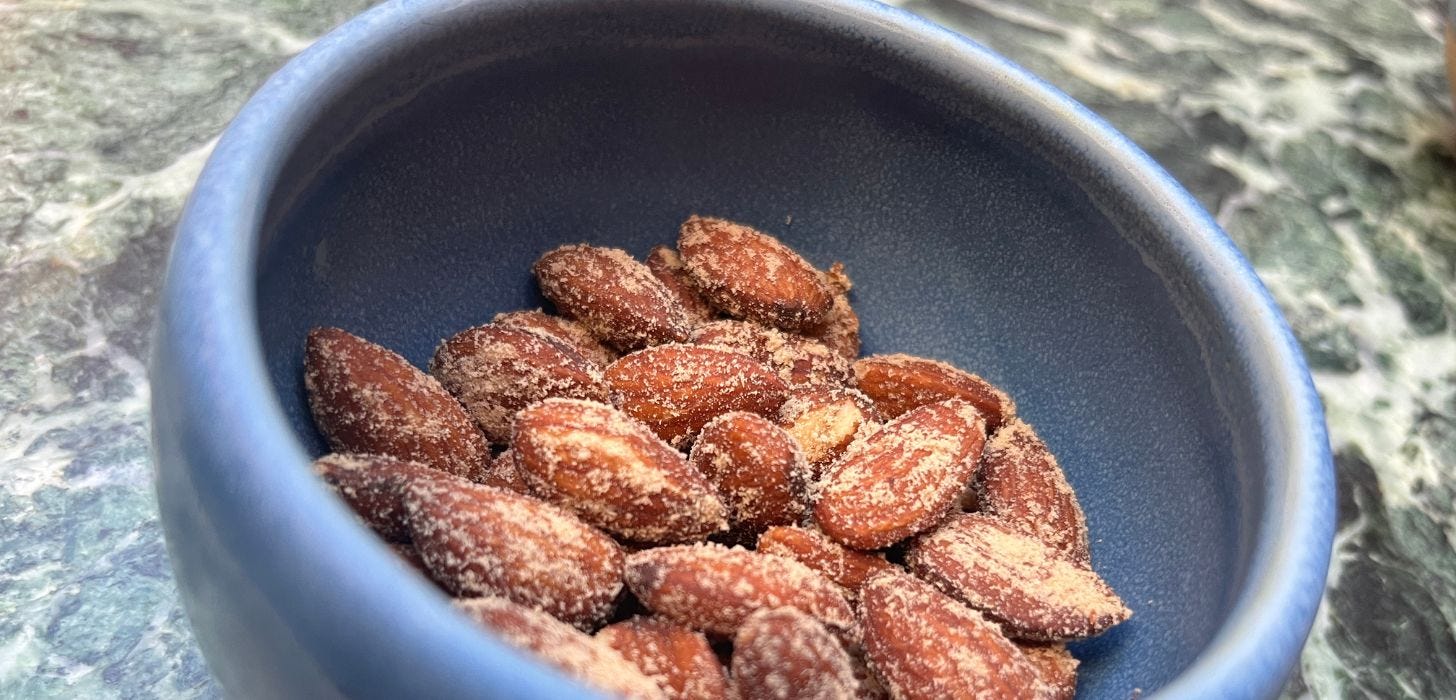
As I write this, someone next to me is eating smoked almonds (which reminds me to order some for myself).
What does the smoke actually smell like? It’s sweet, but not mesquite sweet. More like dried fruit.
It also reminds me of wet red paint on wood. Sometimes smells have colors.
Test yourself.
The next time you open up a bottle of wine (Sauvignon Blanc is a good example), take your time. Get get your nose in glass. Does anything pop out? Any split grapefruits, freshly mowed grass, or mango peels?
You can do this exercise on your own any time, but wine is better in company for a million reasons.
Campare notes. Compare memories and stories.
Here’s an episode on the subject from my series, 21 Days to Wine.
VINTAGE VIDEO
Happy smelling and happy Halloween!
xoxo,
Annie