


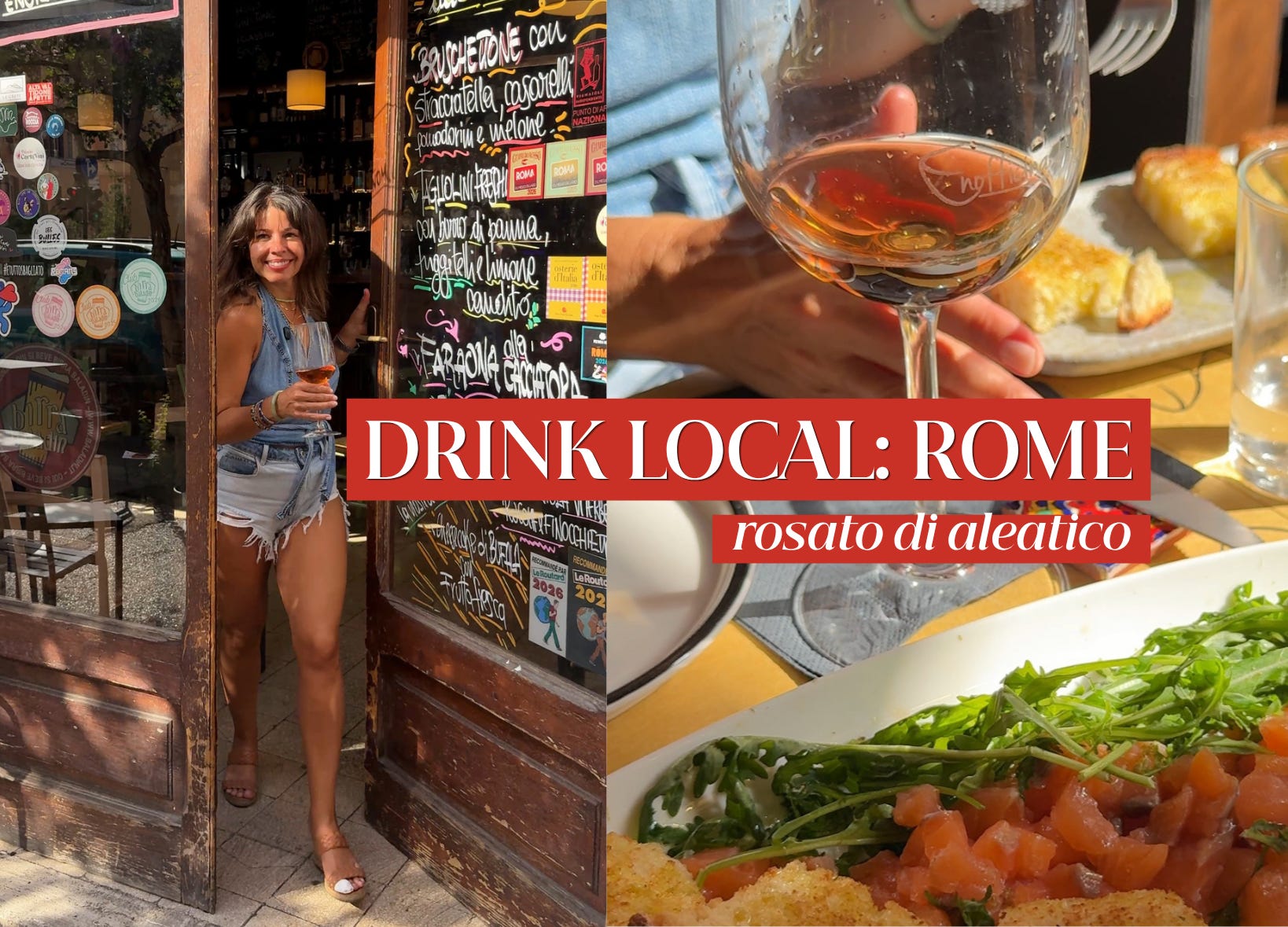
Drink Local: The Series
Initially conceived as a short video series for social media, Drink Local will take you inside my favorite wine bars to taste local, indigenous wines.
Watch it here on Instagram.
I’ll also pair the wine with something from the menu and explain why the two work together.
My goal is to offer authentic, approachable tips on where to go and what to drink when in Rome (my home), throughout Italy, and wherever I travel.
For those of you who want a deeper dive delivered in your inbox, I’ll follow-up every video with post here on Tastefully.
Food and wine are the heart and soul of every place.
Culture and tradition converge at the table which gives a richer meaning to local flavor.
When in Rome, eat and drink as the Romans do.
Seasonal and indigenous produce and unique soils and microclimates influence the direction of cuisine wherever you are.
When possible, I always match expressly place-specific dishes to local wine.
Think: hearty Tuscan Ribollita bread soup and snappy young Chianti.
Otherwise I’ll introduce you to a simple, harmonious recipe you can order on site, or replicate at home.
That’s the transportive magic of food and wine. The right bottle is the next best thing to being there.
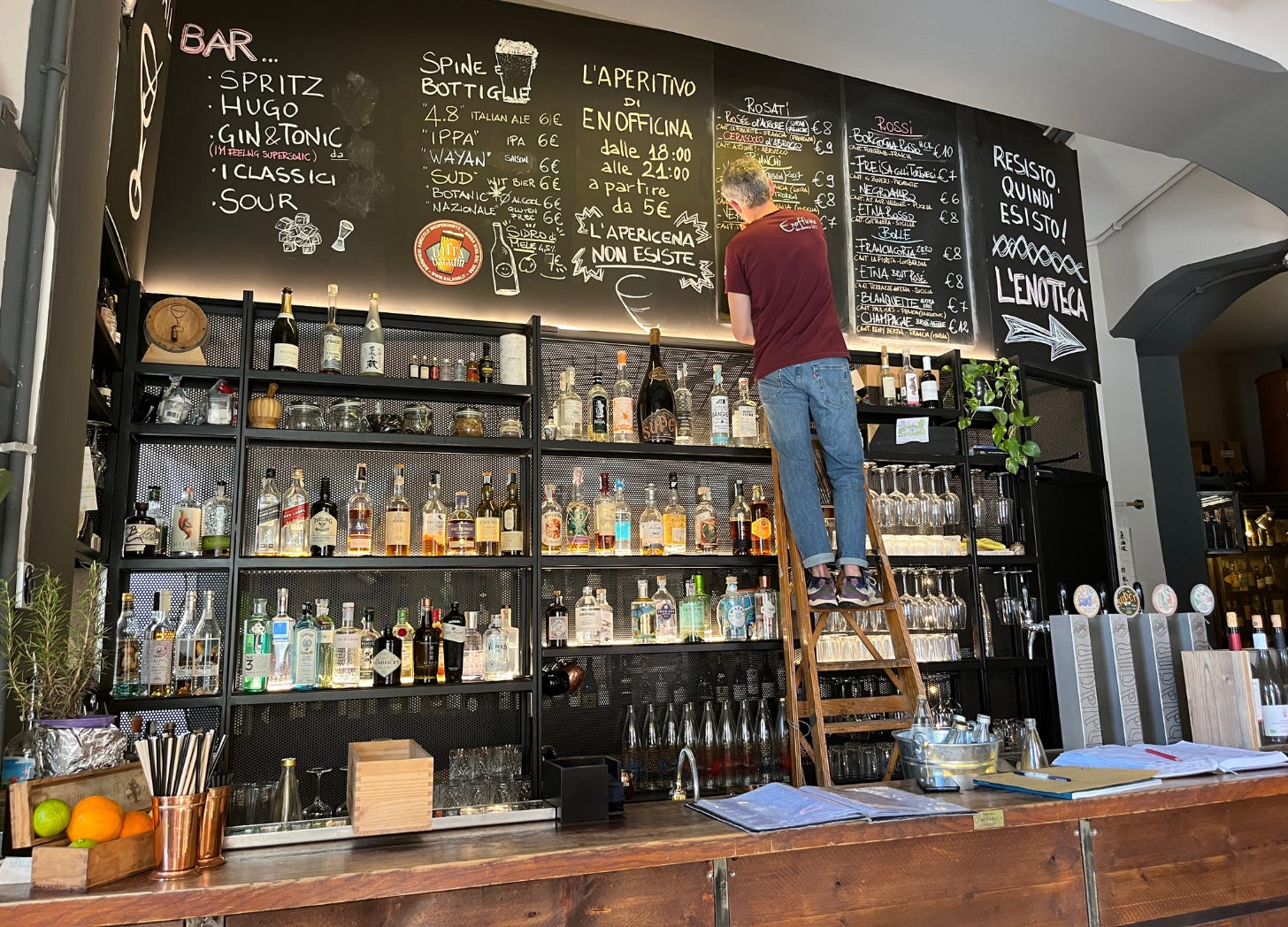
Drink Local in Rome: Enofficina
I first mentioned this wine bar in an article about a quintessentially Roman spring recipe: La Vignarola.
I also included them in a round-up of Rome’s ten best wine bars for Wine Enthusiast.
I love this place!
It’s been around since 2013, taking over a site that, like many of Rome’s wine bars, once housed a vini e oli (a neighborhood outpost for wine and olive oil on tap) dating back to 1936.
They have hundreds of bottles on the list (at least 20 by the glass) all hand-selected by the owner, Alessandro Cappello and loyal collaborator, Valerio Capriotti.
They’re both there almost every night and will happily tell you all about what you’re drinking, along with an equally knowledgable and kind staff.
The menu is a blend of traditional wine bar fare—cheese and charcuterie, olives, and seasonal light bites—and more robust dishes including pasta, meat, and seafood.
If you’re feeling daring, try the Roman specialty, lingua in salsa verde.
Beef tongue served with a parsley-based green sauce with capers, anchovies, and lemon. It’s shockingly tender, and the sauce brightens the somewhat gamey flavor of the meat.
Hot tip for tongue-lovers visiting Italy: try the Piedmontese version of the same dish. Its bagnet verde sauce is a little richer and has breadcrumbs in it.
Most of Enofficina’s ingredients are sourced close to home from reputable organic farms. The bread comes from beloved bakery next door, Panificio Bonci, itself an institution.
Enofficina is also one of the rare wine bars that opens before 5pm, which also makes it a great place to set up my computer and work.
NB: Hours are highly subject to change during July and August, when the less touristy places take their own vacations.
ADDRESS: Via Trionfale, 50, 00195 (Prati / Della Vittoria area)
TEL +39 06 3974 2353
@enofficina_roma
Drink Local in Rome: Aleatico
I could spend pages on Aleatico.
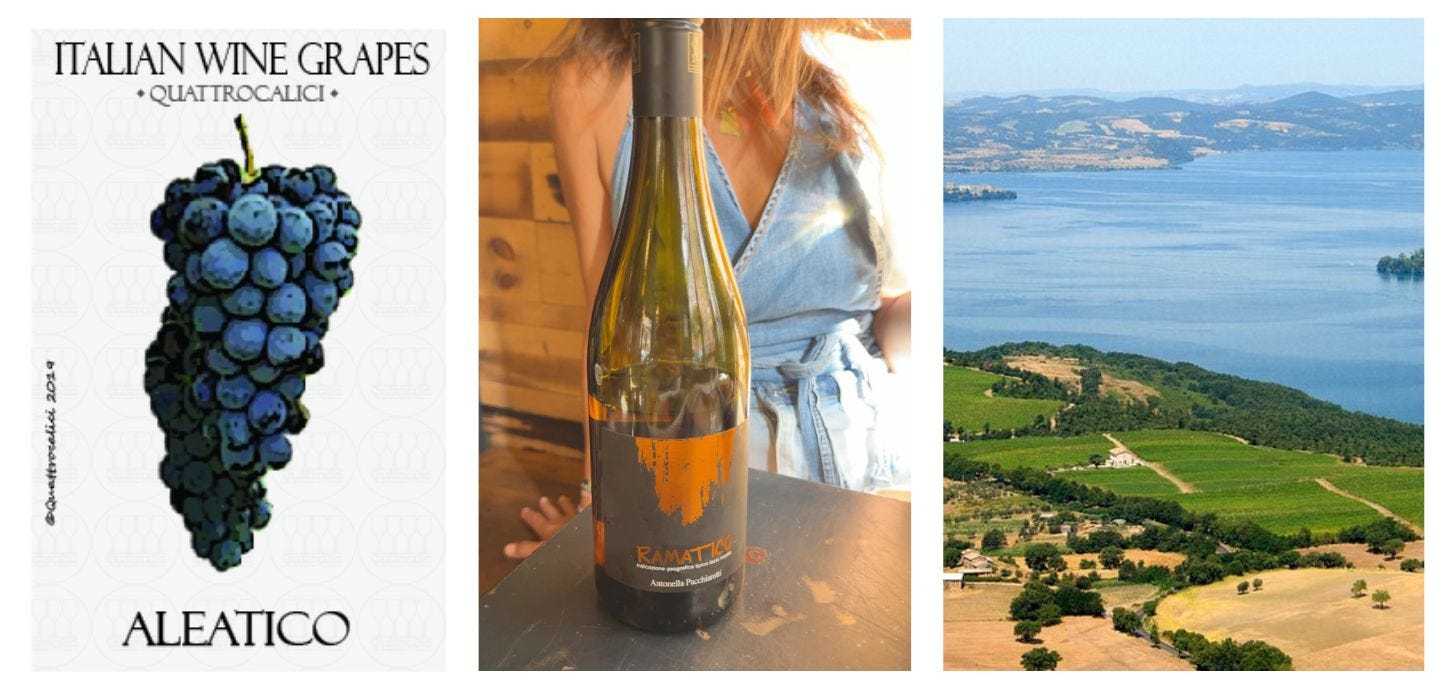
It’s a fascinating red grape variety indigenous to the area surrounding the town of Gradoli (close to Viterbo) and Lago di Bolsena, Europe’s largest volcanic lake— both located about an hour north of Rome.
Aleatico is believed to share some DNA with Moscato, which also thrives in the Roman countryside and through the region of Lazio.
This would explain its luscious aromas of sweet strawberry juice, summer peach, violet, and rose petals along with its more typical “red wine” notes of spices and berry jam. For a red wine, it’s about as floral as it gets.
Aleatico was traditionally made into a dessert wine through late harvest or appassimento (drying in ventilated racks), which produces explosive aromas including brandied cherries, tobacco, dried fruit and spices.
If that sounds good to you, look for an Aleatico Passito, ex. Aleatico di Gradoli DOC Passito.
As a conventional red and a rosé it offers the best of both worlds, a sweet and floral nose that finishes dry and clean.
Aleatico Rosé: ‘Ramatico’ by Antonella Pacchiarotti
A play on words combining aromatico (aromatic), and ramato.
From the root word, ramo (copper), ramato refers to an amber-colored wine, often made from grapes in the gris/grigio family.
Known as pink-skinned, they are exactly that. Neither white or red. Pinot Grigio, for example, if left on the skins for even an hour after pressing, take on a copper hue. Ask your local wine shop for a Pinot Grigio Ramato to try this style.
Vini Pachiarotti Winery
Antonella’s winery sits 450–500 m above sea level, overlooking Lake Bolsena.
Sun-bathed slops and Lazio’s rich volcanic soils produce vibrant aromas and equally energetic wines.
Pacchiarotti is known an Aleatico pioneer, pushing the limits on sweeter more traditional style to produce dry red, white, and rosé versions of the the grape.
She founded Vini Pacchierotti in 1998 with the idea of raising her children to care for the land and flavors generations of her family hold dear.
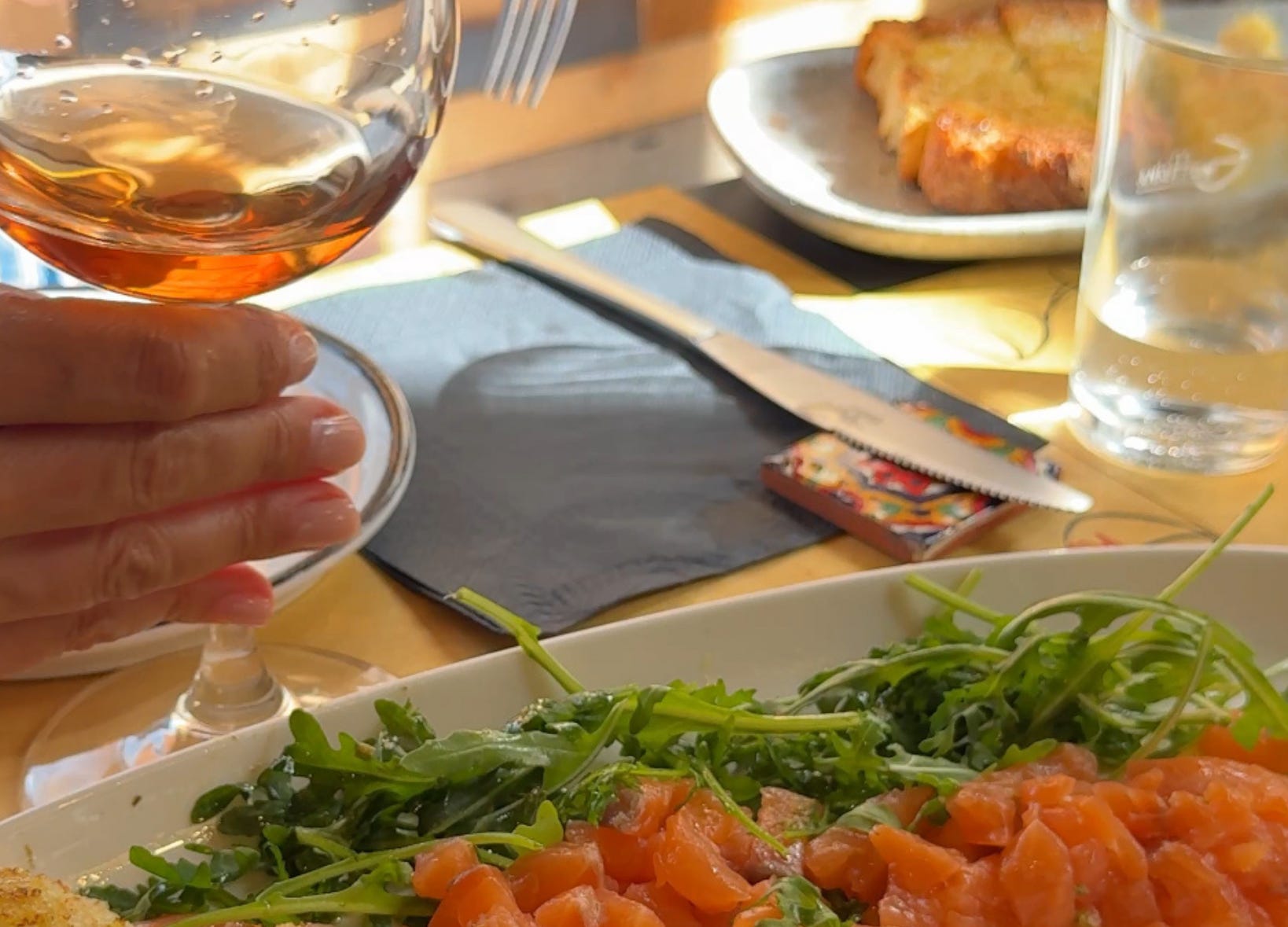
Food and Wine Pairing: Smoked Salmon Tartare With Arugula
This rosé is particularly fun to pair.
Its sumptuous aromas can stand up to something smoky, like this smoked salmon tartare.
The palate is a balanced blend of silky with a blast of freshness in the finale, which slices right through the unctuous, oily, salmon.
Enofficina serves it on lightly toasted bread brushed with olive oil and topped with spicy, fresh arugula.
How to make it at home
You can replicate this recipe by chopping equal parts raw sushi grade salmon with smoked salmon (ex. Nova or lox).
Drizzle in olive oil, a dash of lemon juice, sea salt and pepper. Prepare crostini with a toast of your choosing and top with arugula.