


Winter’s officially on the wing here in Rome, and that means a whole new world of seasonal produce.
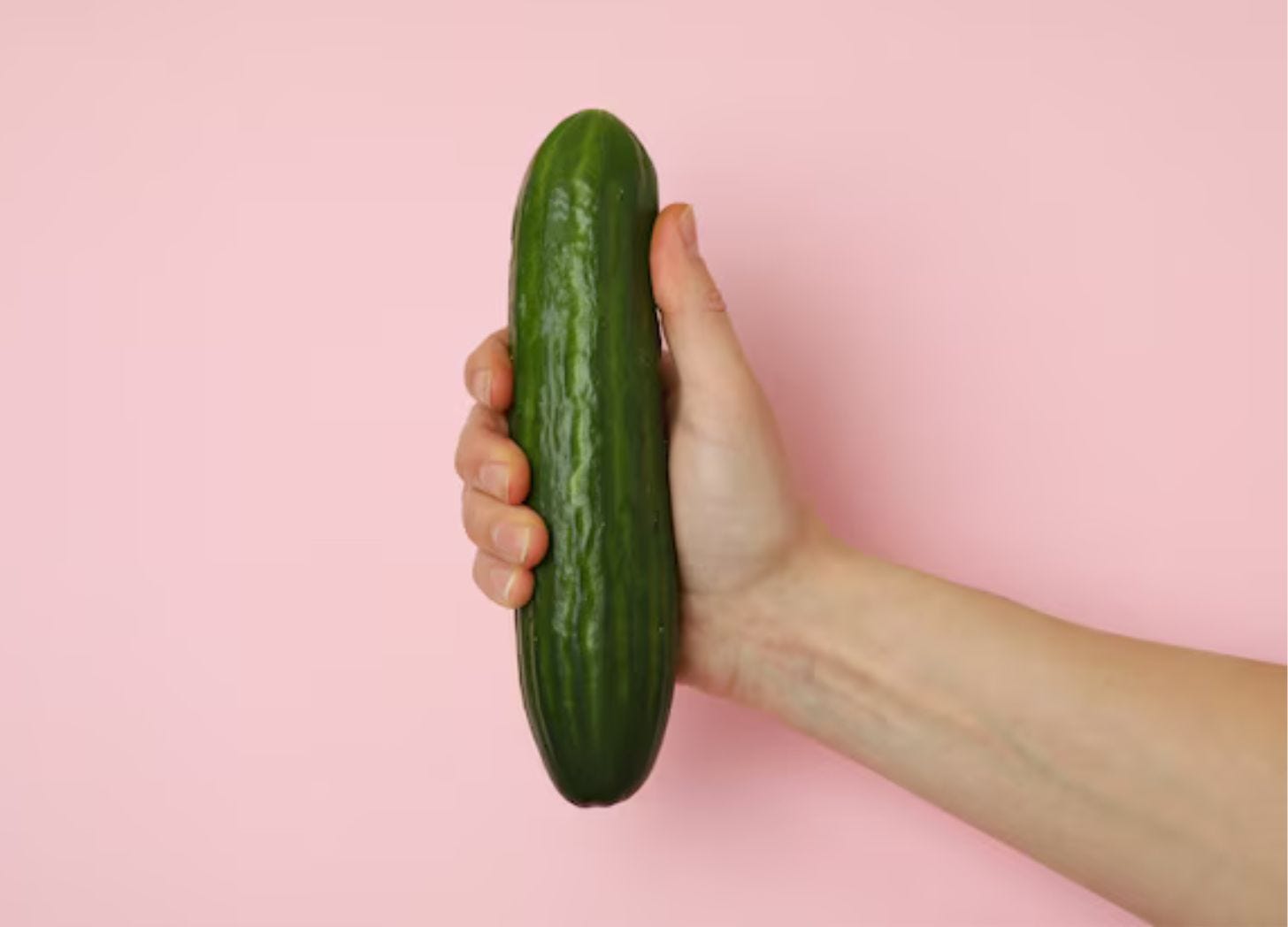
Fresh cucumbers (cetrioli) are ripening on the vine, plump and primed for plucking. I bought some lovely ones today.
Long, ridged, and curvaceous, they piqued my attention. Could you resist?
The lady at my favorite vegetable stand for crispy, curly puntarelle informed me that the variety was known as ‘Dutch cucumbers’ (cetriolo olandese).
“Don’t worry,” she assured me. “They’re called Dutch cucumbers”, but they’re Italian, from Fondi, the town where we live.”
As happens way too frequently, the words fell out of my mouth without thinking. In Italian nonetheless..
“Secondo Lei, gli olandesi lo considerano un complimento?”
Do you think the Dutch consider it a compliment?
Pride and pleasure swirled within me over my quick wit in a second language.
Before panic could take hold—let’s be real, clever or not, this joke was loaded with innuendo—she laughed!
And I bought three of them.
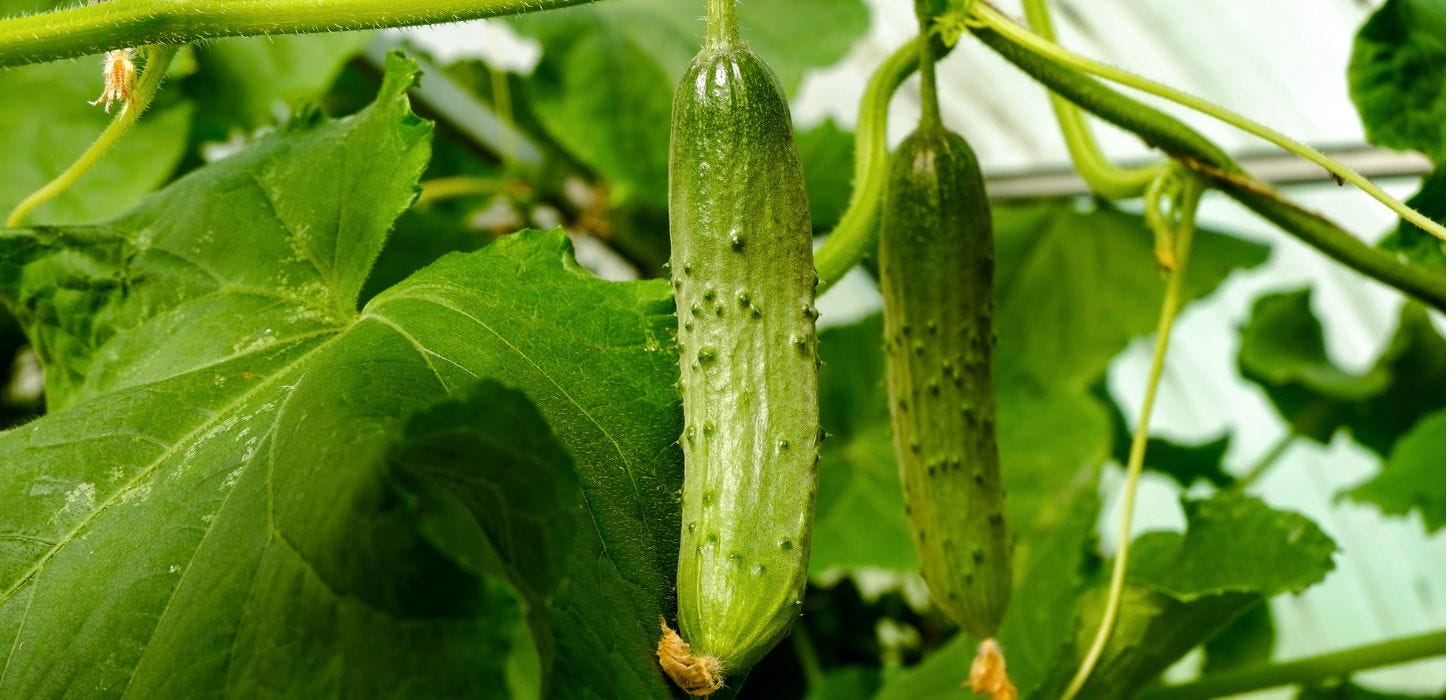
The so-called Dutch cucumber is closely related to what we know of as the English cumber (see below), only here, they’re rarely sheathed in plastic.
Shopping for local, seasonal produce is one of the greatest pleasures of living here.
When visiting, while you may not have a kitchen or spare time at your disposal, a market trip is still worth an hour of your time, for atmosphere alone.
There’s a musical soundtrack to every market.
Vendors hawk their wares, communicate in code or dialect to sellers nearby, call out to familiar faces with nicknames, and greet everyone else with a sweet, if generic, Buon giorno, bella!
As far as the familiar, elongated cucumbers go, the intel is solid.
I always triple research, but I’m copying some of this straight from the AI, which as far as we know is not yet dealing in double entendres.
Maybe I should teach it?

The Long of It
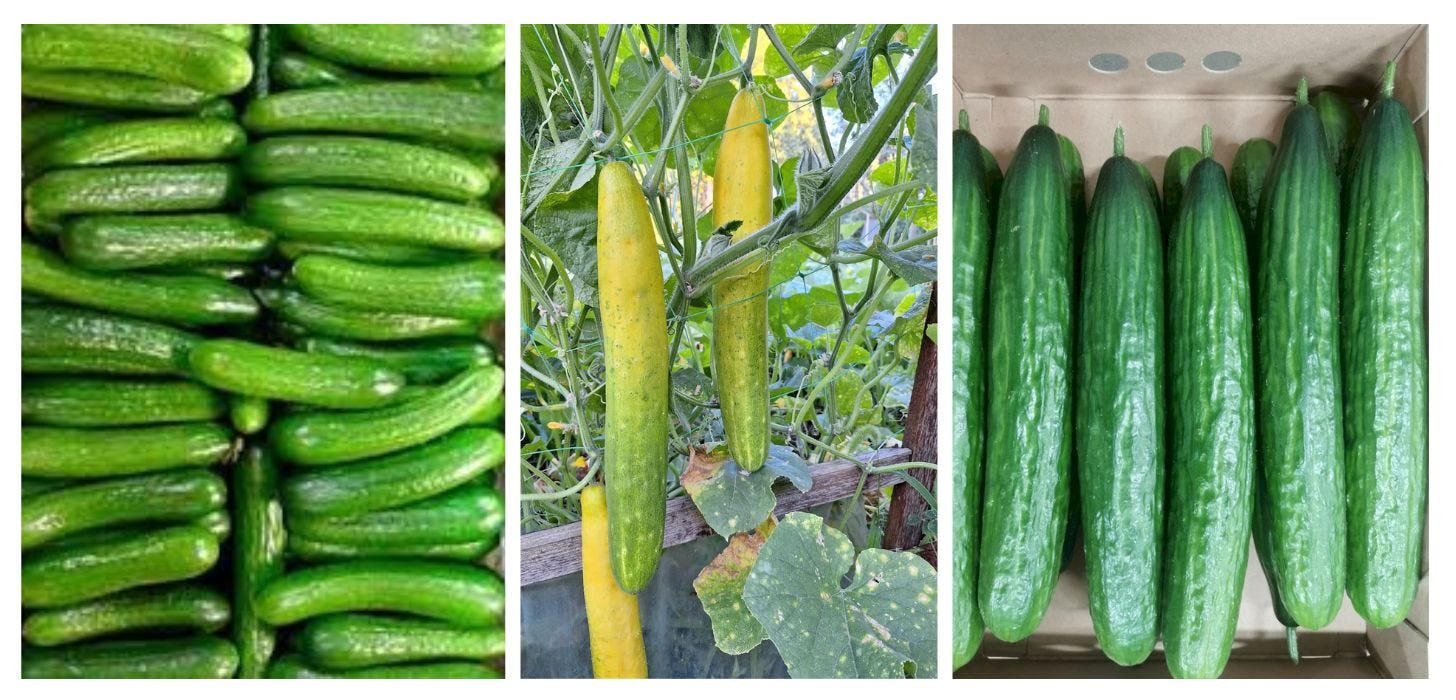
These are the most common cucumbers you’re likely to encounter at markets here.
English Cucumber (Known as the cetriolo olandese): Long, thin, usually wrapped in plastic; mild flavor, very few seeds (Safety first!)
Persian Cucumber (cetriolo persiano): Shorter, crisp, slightly sweet; great for snacking (Can confirm.)
Armenian Cucumber (cetriolo armeno): Long, curved, ribbed; technically a melon but tastes like cucumber (Complicated history.)
Japanese Cucumber (cetriolo giapponese): Thin, delicate skin, crisp texture (Culinarily speaking, can confirm.)
Garden Cucumber (cetriolo da esterno): Thicker skin, larger seeds; often peeled before eating (My silence speaks volumes…)
In a Pickle?
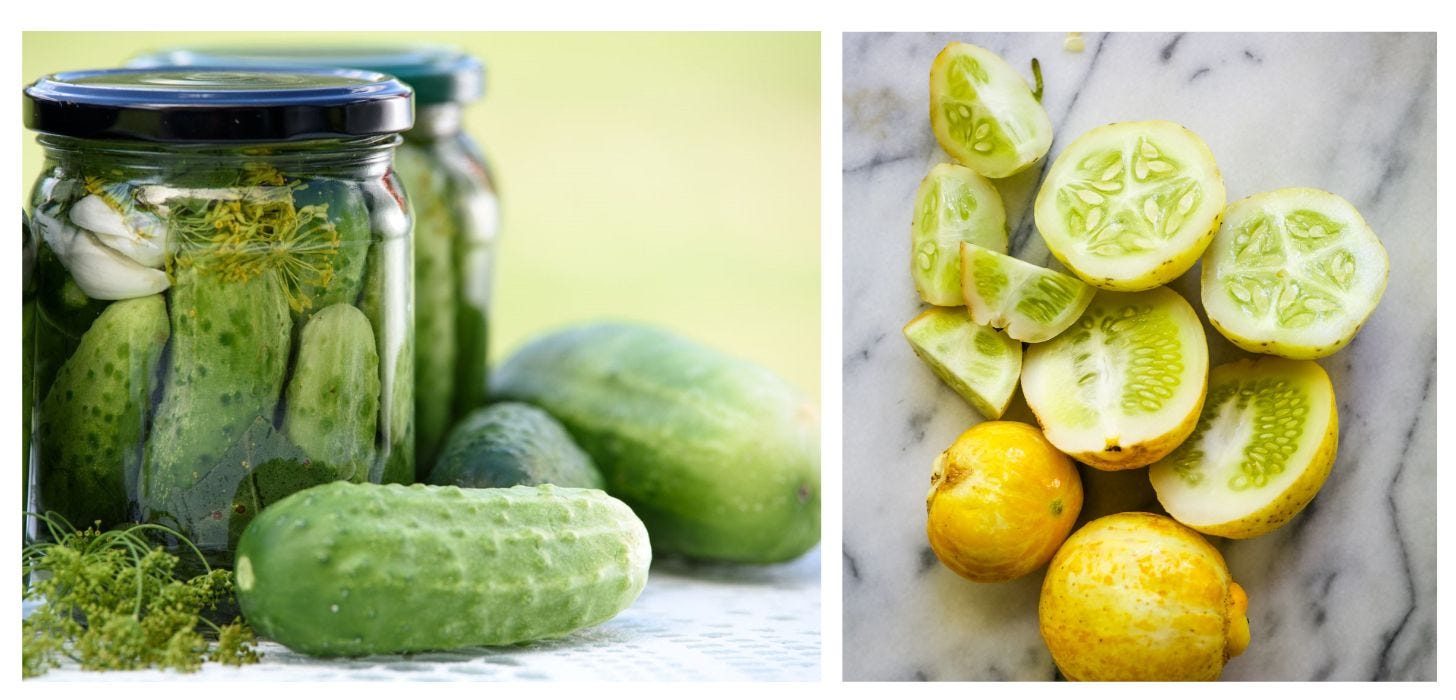
“Sottoaceti” literally translates to under vinegar.
Most common is the Kirby, aka cetriolo kirby.
Apparently, there’s a ball-shaped cucumber that looks like a lemon and has bright citrusy quality called the cetriolo limone (lemon cucumber, or crystal cucumber.
I haven’t seen them around Rome, but you might!
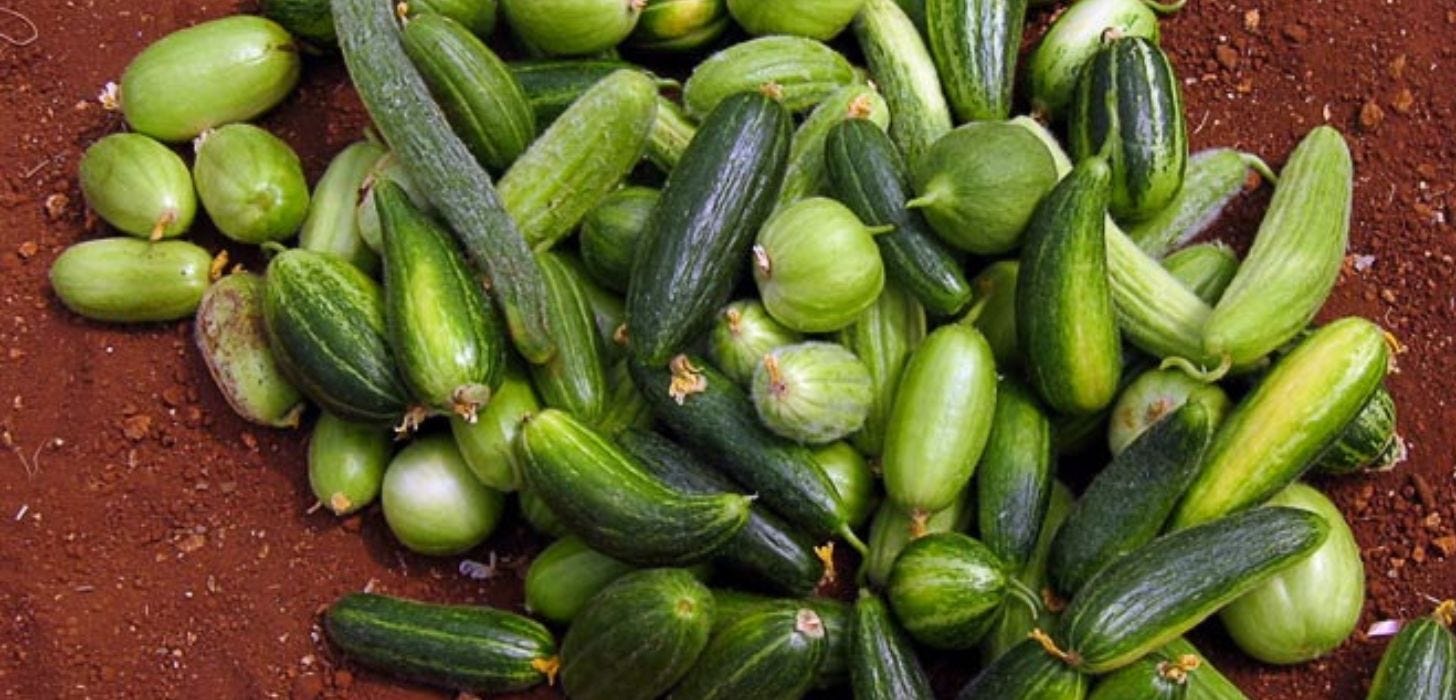
The Vast and Varied World of Carosello Barattiere
You never forget your first.
Summer 2012, deep in the boot heel. Not the Missourian one. Puglia!
It was an unforgettable summer, filled with crystalline waters, mountains of fresh-caught seafood, and local delicacies galore (including Tiziano and Giuseppe).
Right. Cucumbers. We’re talking about produce. Stay with me.
I spotted the carosello barattiere on the side of the road atop a cart belonging to an elderly couple. Some looked like giant limes, others like miniature watermelons.
So different. So divine!
Cucumis melo L (musk melon) is a species of the Cucurbitaceae family.
They’re sweet and tender, don’t have too many seeds, and taste great sliced like a melon.
Interestingly enough, other cultivars of Cucumis melo include honeydew and cantaloupe.
But who has time for melon when your working your way through all the local sub-varieties of the carosello.
Here’s a short list.
Carosello Barese (Carosello from Bari): medium length and chubby (my words, not ai). I found some garden seeds for thes
Mezzo Lungo di Polignano (The Half-Long of Polignano): Similar to the Barese. Can be hairier. Let your mind wander… or look it up.
Carosello Tondo di Manduria: (The Round One from Manduria): Best in sets of two. Because you can’t eat just one.
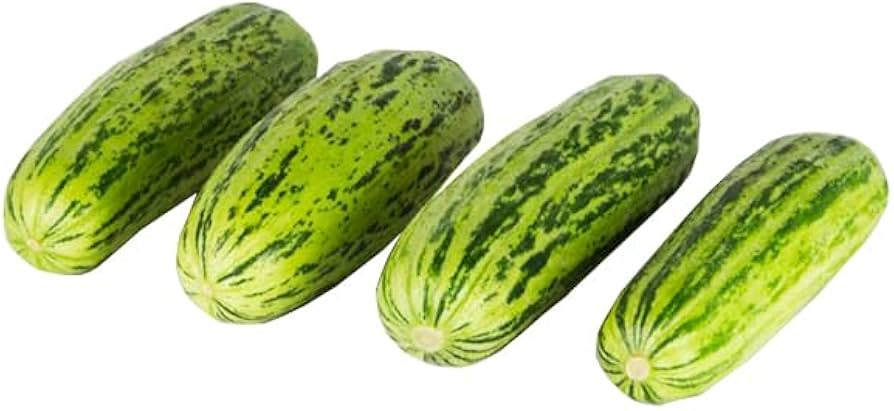
The first two varieties are sometimes known as Scopatizzo.
Etymology NSFW: A derivative of the Italian: scopare (to sweep) or slang for F@*K.
(Another one of my proud Italian jokes: Always sweep the floor before “sweeping” on the floor.)
I consulted an authentic Pugliese woman to be sure, and she confirmed scopatizzo was official linguaggio.
“Yes, it’s real. You know, In Puglia we’re always thinking about that… so joke all you want. It’s real.”
In case you still need proof, here’s a listing from an official Italian agricultural site.
As far as cucumbers (and innuendos) go. It’s Puglia for the win.
We’ll get to Sicilian eggplants later this summer.
XO,
Annie
PS - Put your favorite cucumber recipes in the comments!
I have grown dozens of Carosello varieties. I love each of them and especially love the Italian friends I have made while visiting Puglia.
I never knew there was so much to know about cucumbers (even without the inuendo)!